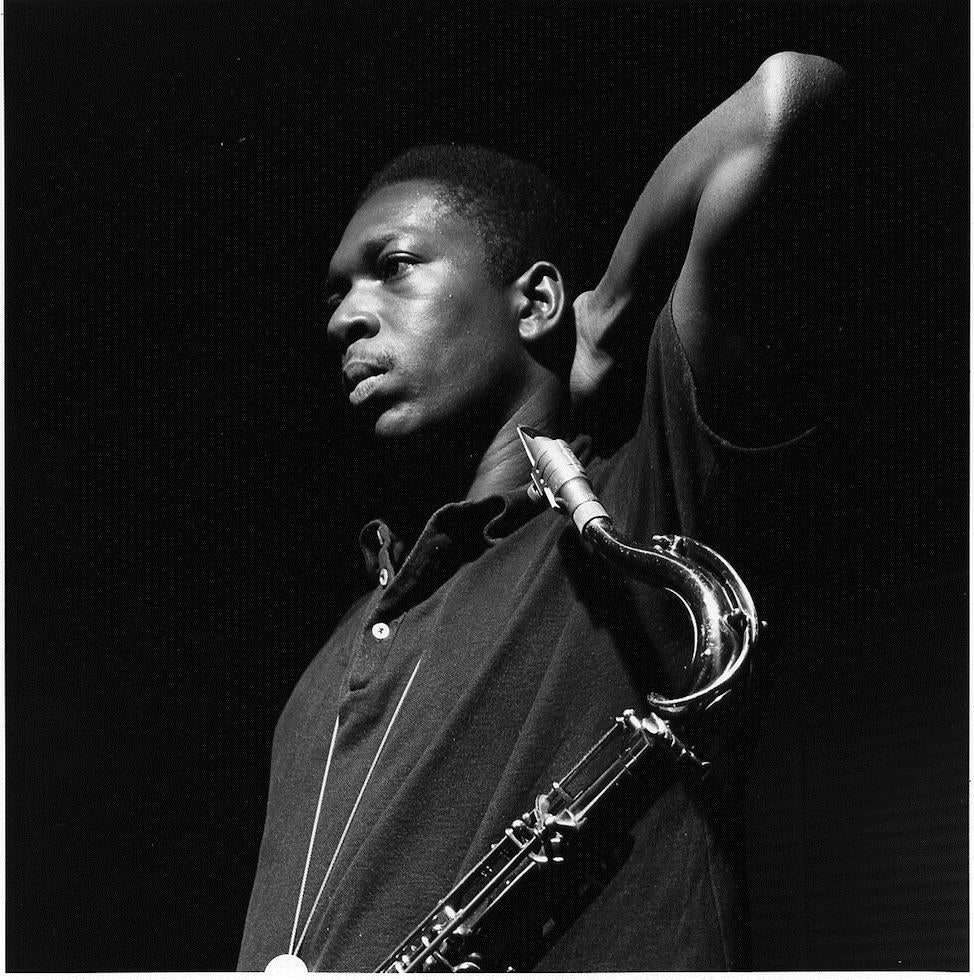
September-December 2026
On this day, 100 years ago, John Coltrane was born. His musical life has been much too short, from his debuts in 1945 just after he came back from the Navy, to his death in 1967, just aged 40, but offered a variety a musical styles of jazz music, from be bop and then a fruitful companionship with Miles Davis, to the quartet he led, to the birth of free jazz, sometimes forceful and noisy, sometimes lyrical as a prayer.
I’ll start this thread with a beautiful ballad from the first recording that John Coltrane recorded as a leader. That song, written by Matt Dennis in 1941 was first recorded by the Tommy Dorsey orchestra, sung by Frank Sinatra. The lyrics by Tom Adair apparently referred to Lana Turner.
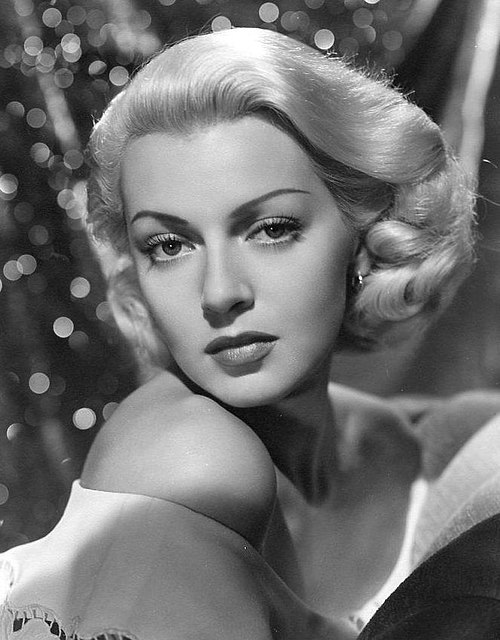 >| You smiled at me so sweetly >| Since then one thought occurs
>| That we fell in love completely >| The day that I bought you
violets for your furs
Coltrane plays tenor saxophone. Red Garland is on piano, Paul Chambers on bass and Albert “Tootie” Heath is on drums.
“Violet for you furs (Matt Dennis), Coltrane, 1957
I will stay in the ballad mood for some days, probably because the ballads Coltrane played have some immediate reach on me, while the faster pieces, and I’m not talking about the furious ones, sometimes keep me distant.
Here is that piece, “Naima”, composed in 1959 for his wife. The melody is simple, the harmony does not vary much, suggested in a simple way by Wynton Kelly’s chords on the piano, each chord lasting one full bar, and by a striking bass line that leaves engaging silences. The piano chorus hides the sophistication of its modulations. This is a beautiful piece of love.
Preparing this post and reading Wikipedia’s page on that composition, I discovered a poem by Kamau Brathwaite which I will simply copy here.
“Naima” for John Coltrane
Propped against the crowded bar
he pours into the curved and silver horn
his old unhappy longing for a home
the dancers twist and turn
he leans and wishes he could burn
his memories to ashes like some old notorious emperor
of rome, but no stars blazed across the sky when he was born
no wise men found his hovel, this crowded bar
where dancers twist and turn
holds all the fame and recognition he will ever earn
on earth or heaven, he leans against the bar
and pours his old unhappy longing in the saxophone.
As promised yesterday, I continue with a ballad composed by Richard Rogers with lyrics by Lorenz Hart that was written for the movie Mississippi. This piece, feature in the album Ballads, was recorded in December 1961 with McCoy Tyner on piano, Reggie Workman on bass, and Elvin Jones on drums. The next year, Reggie Workman would be replaced by Jimmy Garrison for the rest of the recording that took place one year later in November/December 1962.
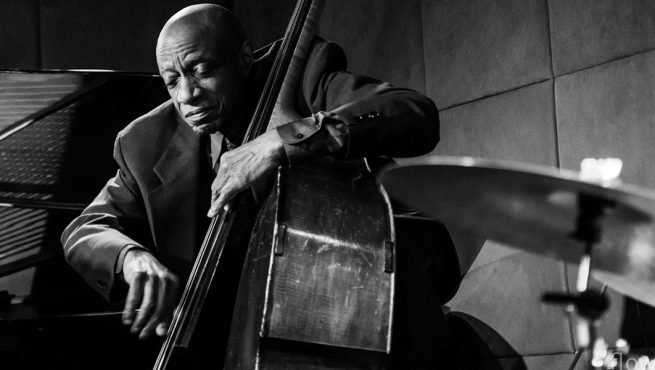
This is the kind of album that those high skilled musicians can do. Apparently, they had never played those tunes before, they discussed a little bit on the way they would play them, what chord substitutions they would choose, rehearsed no more than half of an hour, and make an un-cut version which is fit for the album.
Please appreciate the final seconds of the piece, when Jones summons the thunder and the piece comes to its end.
“It’s easy to remember (Richard Rogers), Ballads, 1963
In 1963, Coltrane recorded an album of ballads with singer Johnny Hartman with what is now understood as his classic quartet: McCoy Tyner on piano, Jimmy Garrison on bass and Elvin Jones on drums.
This piece, Lush Life, had been composed by Billy Strayhorn between 1933 and 1936, but it was first performed in 1948, by Duke Ellington’s band with which Strayhorn has composed and arranged many classic tunes for almost all of his life.
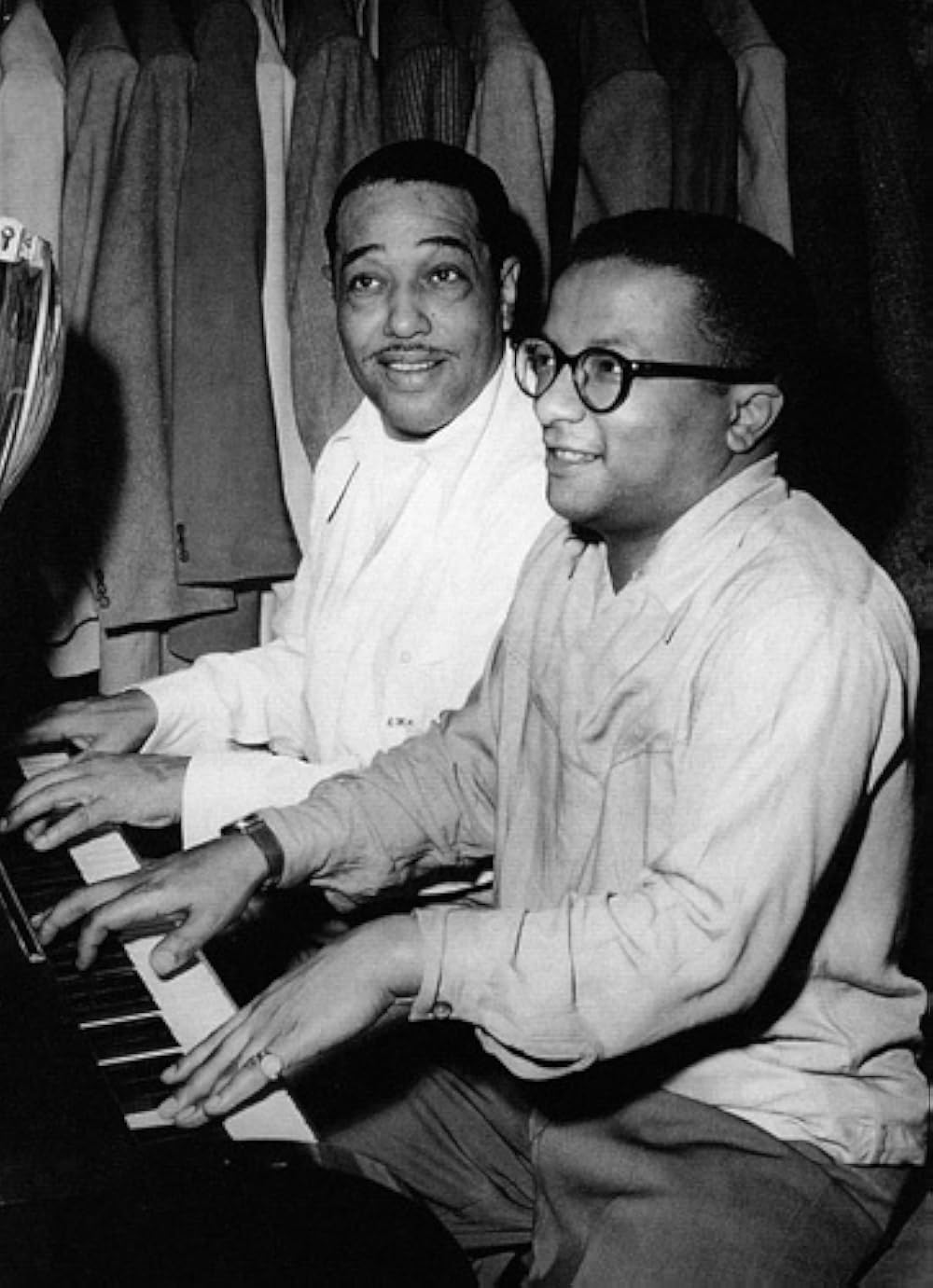
It starts with Hartman singing only accompanied by piano; the lyrics are full of unfilled promises and both Tyner and Hartman play it with both tension and sensitivity.
Life is lonely again
And only last year everything seemed so sure
Now life is awful again
A troughful of hearts could only be a bore
Then Garrison and Jones enter while Coltrane simply responds after some phrases of Hartman.
And there I’ll be
While I rot with the rest
Of those whose lives are lonely, too.
The lyrics could almost end there, and Coltrane starts his own rendition of the song, staying very close to the melody. The sound of the quartet is immediately more dense, with a double time feel; Jones, on brushes, adds a lot of musicality to the interpretation. When the riveted ride cymbal ends the final bar of the melody, Hartman comes back and sings the last verse once more, slows the tempo to the end.
“Lush Life” (Billy Strayhorn), John Coltrane and Johnny Hartman, 1963
Yesterday, we listened to a version of “Lush Life” with vocals by Johnny Hartman, but Coltrane had already recorded that tune in 1958, in a quintet version.
The song starts with Coltrane on tenor saxophone, Red Garland on piano, and Paul Chambers on bass. Louis Hayes on drums enters only after the first exposition of the theme. Then Garland starts a chorus. Then Donald Byrd, on trumpet, starts playing a chorus.
I would like to understand what brought him in that recording session where they apparently only recorded that tune! An explanation might be that Red Garland’s trio (with Art Taylor on drums and George Joyner on bass) made four recordings in the end of 1957 for which he invited both Coltrane and Byrd. So maybe Coltrane liked the quintet mood and simply returned the invitation.
In his Downbeat review, Dave Rickert notes that Byrd helps pushing the tempo a little bit. On the other hand, he goes back to the initial tempo at the end of his chorus. Anyway, this gives Coltrane another opportunity for a short chorus. Then both Byrd and Coltrane play the melody together and conclude the piece using descending harmonies.
“Lush Life” (Billy Strayhorn), Lush Life, 1958
This is a composition by John Coltrane himself, recorded in October 1960 but only released in the 1964 album Coltrane’s Sound. The recording had taken place in the studios of the Atlantic disc company, but when Coltrane left the label for Impulse, he abandoned recorded material that the company released, apparently without Coltrane’s approval.
Nevertheless, the recording is very good. This is a quartet with McCoy Tyner on piano, Elvin Jones on drums and Steve Davis on bass. John Coltrane plays soprano saxophone, an instrument that he had been offered by Miles Davis when they were touring together in Europe.
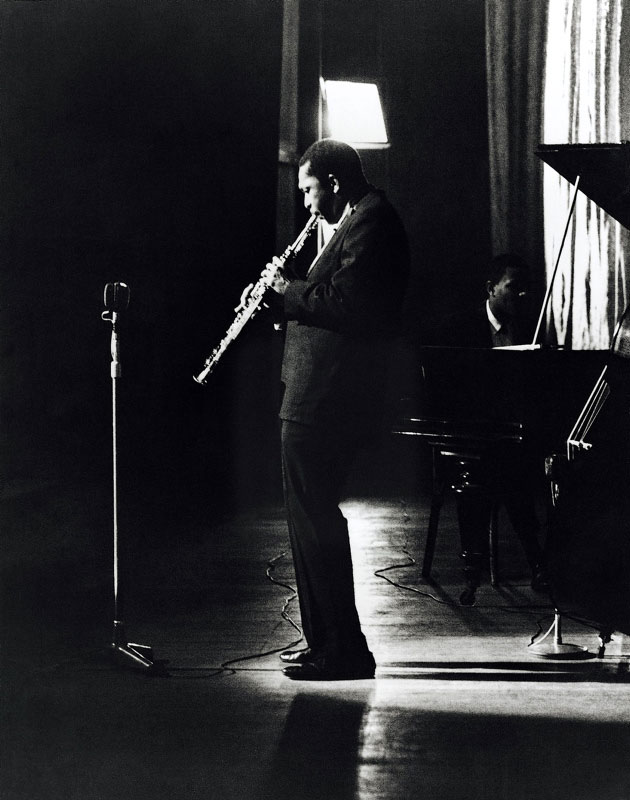
“Central Park West”, Coltrane’s Sound, 1964
Featured in My Favorite Things album, this is a 1944 song by Cole Porter that Coltrane also recorded in October 1960 with the same quartet as yesterday’s theme: Steve Davis on bass, McCoy Tyner on piano, Elvin Jones on bass. Coltrane is on the soprano saxophone, and all musicians play that beautifully sad melody in a very restrained way.
|> There’s no love song finer |> But how strange the change from major to minor |> Every time we say goodbye
“Everythime We Say Goodbye” (Cole Porter), My Favorite Things, 1961
This is a composition of McCoy Tyner — Aisha was the name of his wife. Together with Tyner on piano, we have Reggie Workman is on bass, Elvin Jones on drums. Three horns accompany this ballad. On tenor saxophone, Coltrane exposes the theme and takes a first chorus. His is followed by Freddie Hubbard on trumpet and then by a quite free Eric Dolphy on alto saxophone. Tyner also takes a chorus before Coltrane ends it beautifully.
The piece is written in 4/4, the structure is AABA, but the very slow melody is sustained by the rhythmic section with some interesting unbalance : the rhythmic motive on the piano is syncopated, and using brushes, Jones sometimes plays the 4 beats of the bar, and sometimes plays 6 triplets.
“Aisha” (McCoy Tyner), Olé, 1961
A beautiful composition by John Coltrane, recorded in 1964 for the album Crescent.
Coltrane plays tenor saxophone and is playing within his classic quartet that he had assembled around 1963: McCoy Tyner is on piano, Jimmy Garrison on bass, an Elvin Jones on drums.
“Lonnie’s Lament”, Crescent, 1964
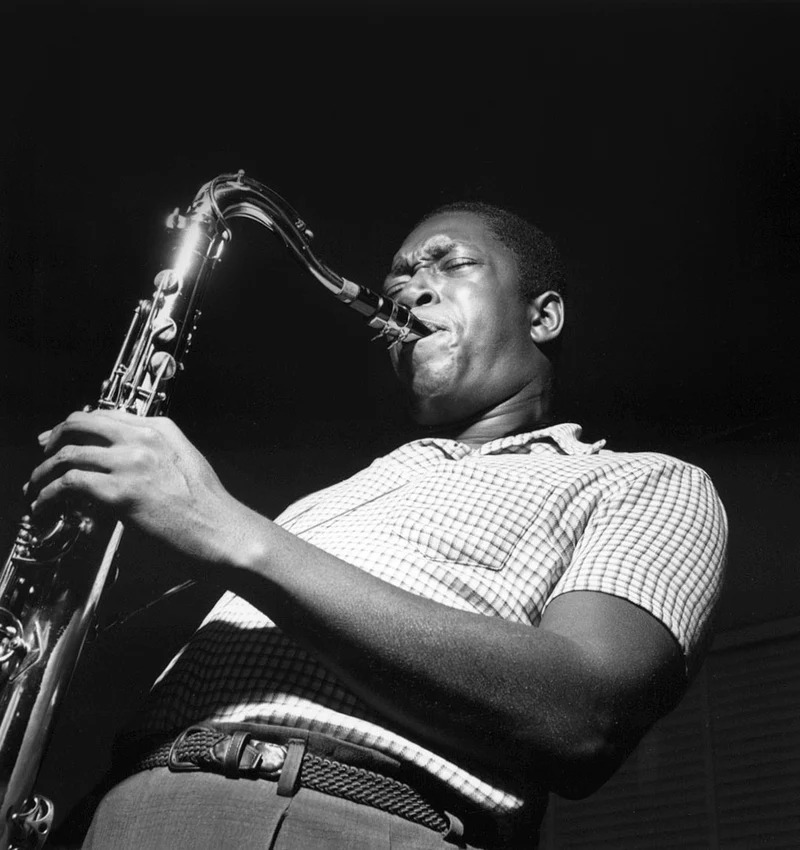
Let us keep the album Crescent playing and listen to another composition by Coltrane, “Wise One”.
The first part of the tune is a shriekingly sad melody that is sung on saxophone, with a rubato accompaniment by Jones, Garrison and Tyner. Then the musicians switch the mood to a calm but rhythmic latin dance on which Tyner starts a chorus. Coltrane then plays a chorus sometimes flying over the repetitive rhythm, sometimes sustained by it. After the chorus ends low, with a cymbal roll, Coltrane recaps the initial melody and concludes, leaving the final notes for the piano.
The latin rhythms of yesterday’s tune make me wish to explore the latin jazz aspects of Coltrane’s music. It won’t be so easy to select tunes in Coltrane’s own repertoire because he didn’t record so many latin themes.
This song, “The Night Has A Thousand Eyes”, was originally composed 1948 for a movie by Jerry Brainin, with lyrics by Buddy Bernier.
Don’t whisper things to me you don’t mean
For words deep down inside can be seen by the night
The night has a thousand eyes
And it knows a truthful heart from one that lies
Coltrane’s quartet transforms the song by playing it very fast, the first section in afro/cuban style, while the second one reverts to swing. (McCoy Tyner is on piano, Elvin Jones on drums, Steve Davis on bass.)
A few years, in 1962, Sonny Rollins would record a version of that song in the style of a mellow bossa nova. Although released in 1964, Coltrane’s album Coltrane’s Sound was recorded in 1960, and I don’t know how both saxophonists influenced each other.
“The Night Has A Thousand Eyes” (J. Brainin), Coltrane’s Sound, 1964
This is a song that percussionist Mongo Santamaria composed (and recorded) in 1959. Then it had a 12/8 rhythm with a clave playing 4 beats of three pulsations per bar, while the snare drum plays 3 beats of four pulsations.
In October 1963, John Coltrane played it live at Birdland and it gave the tune a totally different feeling: now the main rhythm is that of the syncopated jazz waltz which is reinforced by the piano playing 2 notes per bar, and this is the style that is chosen for most standard transcriptions of that tune.
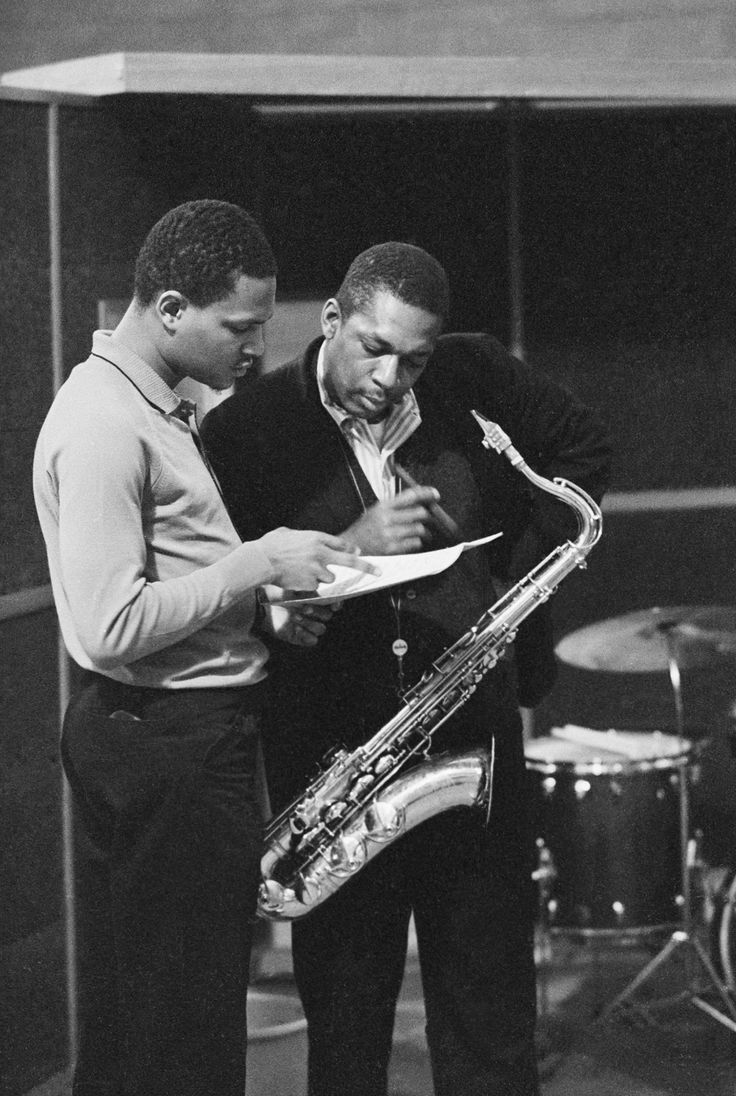
Also: while Santamaria played the melody in a smooth and mellow manner, Coltrane attacks it with a shrieking soprano saxophone.
I suppose that the music started that night, the audience of Birdland (where you can eat or chat) must have stopped anything they were going to do because the musicians didn’t leave a moment of peace during the 11 minutes of this ferocious afro blue waltz.
“Afro Blue” (M. Santamaria), Live at Birdland, 1964
In 1957, Coltrane’s drug addiction led Miles Davis to end up his collaboration with the saxophonist, despite the growing reputation of the later, and the recording company Prestige took its chance to have him on several sessions as a side man.
Here he plays under the lead of pianist Mal Waldron, with Hackie MacLean on alto saxophone, Bill Hardman on trumpet, Julian Euell on bass, and Art Taylor on drums.
The theme, “Blue Calypso”, is a straightforward theme in the genre that had been made popular by Sonny Rollins’s “St Thomas” (1956), with an extraordinary Max Roach on drums. Jazz critics found the recording quite uninteresting, but for Coltrane’s choruses. Probably with a definite bias for the instrument, note the role of the drums in that tune, the way Taylor starts the dance without any other accompaniment, the drum calls that he makes before Coltrane’s chorus, as well as his own short chorus at 7:28, to the fade-out ending.
“Blue Calypso” (M. Waldron), The Dealers, 1964
I continue my investigation of latin jazz influences on John Coltrane’s music. This tune, “Eclypso”, is a composition of the pianist Tommy Flanagan recorded in 1957 but only published in 1959 after the end of Coltrane’s contract with Prestige.
The album is called The Cats, and features four musicians on the cover: Tommy Flanagan (piano), John Coltrane (tenor saxopohone), Kenny Burrell (guitar) and Idrees Sulieman (trumpet). With those four cats, we have Doug Watkins on bass and Louis Hayes on drums.
The song has an AABA form, where the A is played in a latin style while the B is played swing in ‘“trading four” style: two bars with the full band, two bars of drum solo. The choruses are also played swing.
(Twenty years later, Flanagan would offer a second recording of that tune with George Mraz on bass and Elvin Jones on drums.)
“Eclypso” (T. Flanagan), The Cats, 1959
Coltrane’s music has sometimes be released much later than the recording date. Today’s piece, “Bahia”, was recorded in 1958 but gave its title to an album that appeared in 1965, at a time where Coltrane had published much more personal music with his classic quartet. To the point that jazz critics of that time from Record Mirror wrote (p. 8) that “Talk of Coltrane being ‘anti-jazz’ must be dispelled by this little lot.”
This is a composition by Ary Barroso, and the rhythmic flow is sustained by a short motive on the piano and bass and an omnipresent cascara on the ride cymbal that is announced right away.
Red Garland is on piano, Paul Chambers on bass, and Art Taylor on drums. The album cover shows Coltrane on soprano saxophone but he plays tenor saxophone on that album.
“Bahia” (A. Barroso), Bahia, 1965
We continue our exploration of latin jazz in Coltrane’s music with this tune recorded with Art Blakey’s big band. It is not so easy to track the saxophone player, maybe he’s the one who plays the short chorus at the end — am I even able to distinguish a tenor saxophone from an alto one ? — but this short energetic piece is worth listening to.
“El Toro Valiente” (C. Gambel, C. Salaam), Art Blakey Big Band, 1958
This tune is not really latin, but its Spanish influence is definitely a step aside from the standard harmonies of jazz. It is in fact inspired from a traditional Spanish song, El Vito. The fast 3/4 tempo avoids the waltz feel by playing long assertive rhythmic figures by McCoy Tyner on piano and Elvin Jones on drums: two bars, most often, but even four bars for the bass introduction.
John Coltrane plays soprano saxophone, Freddie Hubbard, trumpet, and Eric Dolphy plays flute under the pseudonym of George Lane, because he had a contract for a different disc company.
Can you spot that there are two bass players here ? — Art Davis and Reggie Workman, one of them choruses with a bow around 9:00, while the other one goes on plucking. And then they change, the chorus is done with plucked chords while the other one plays the melody on the bow. And then both of them improvise together!
While this tune, “India”, definitely makes us leave latin jazz, there are obvious common points with yesterday’s “Olé”. This is Coltrane experiencing different musical scales and different traditions; moreover, we have two basses, Reggie Workman and Jimmy Garrison, we also have Eric Dolphy on bass clarinet, Elvin Jones on drums, McCoy Tyner on piano, as well as Garvin Bushell on either oboe, and Ahmed Abdul-Malik on oud.
This tune was recorded live at Village Vanguard in November 1961. While one version was released in 1963, for the album Impressions, the one I chose comes from The other Village Vanguard tapes that were published in 1977, ten years after Coltrane’s death. Indeed, the starting notes clearly show the will of the musicians to recreate the sound of hindustani music, using bass and oud to suggest the sound of a sitar and of a tanpura.
“India”, The other Village Vanguard tapes, 1977
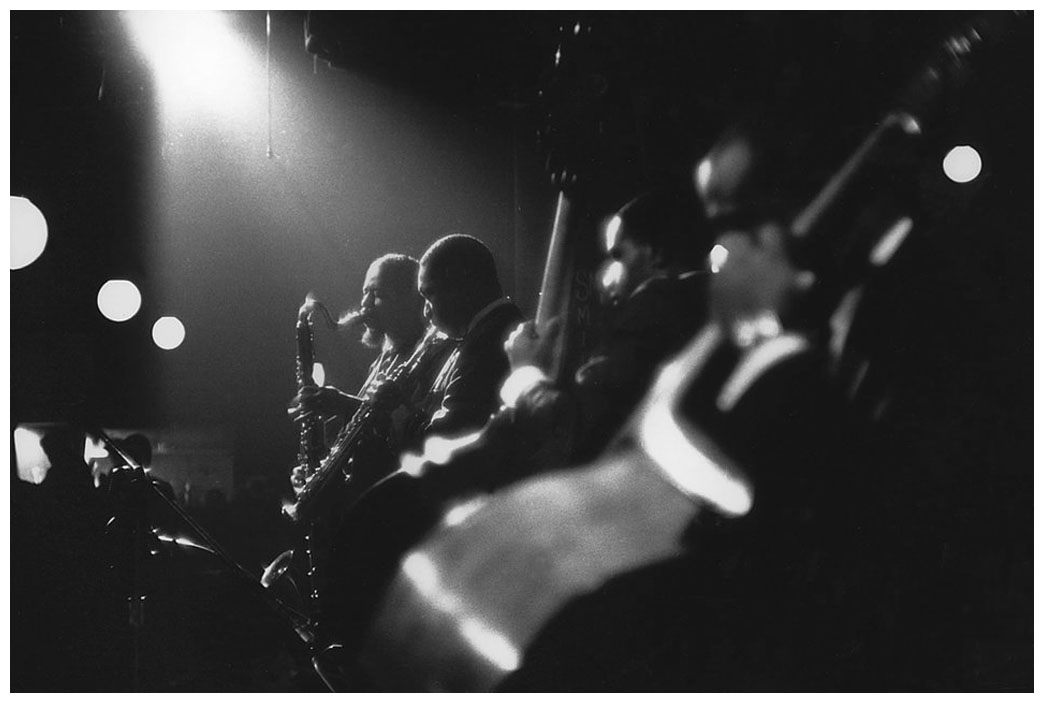
Further exploration of rhythms that depart from the traditional jazz form. This tune, “Dakar”, is a composition by Teddy Charles, recorded in 1957 with Cecil Payne on baritone saxophone, Pepper Adams on baritone saxophone, Mal Waldron on piano, Doug Watkins on bass and Art Taylor on drums. It was first released in 1958 in an album Baritones and French Horns under the names of Papper Adams, Cecil Payne (baritone players), Julius Watkins and David Amram (french horn players), but was reissued in 1963 under the name of John Coltrane, to capitalize on his fame.
As most afro/cuban pieces (some music sheets indicate “jazz rumba”), its form alternates between latin and swing, and the choruses are played in swing style.
“Dakar” (T. Charles), Dakar, 1963
More musical explorations of African rhythms by John Coltrane. This was in 1958 sessions that John Coltrane lead jointly with Wilbur Harden (trumpet), with Curtis Fuller on trombone, Tommy Flanagan on piano, Ali Jackson on bass and Art Taylor on drums. As often, the African inspiration is limited to the exposition of the theme, and the rest is played as usual.
“Dial Africa” (W. Harden), Jazz Way Out, 1958
Let’s go on with Coltrane’s African exploration with this piece, “Dahomey Dance”, from the 1961 album Olé Coltrane.
Starting with a slightly unusual riff on bass, accompanied with a light swing on drums, the tune consists of an ostinato slow descending chords, until John Coltrane starts his chorus (you can guess, by the way he changes his chords in comparison to those of the band, that he will start the chorus).
McCoy Tyner wrote: “On ‘Dahomey Dance’ [Coltrane] had a record of these guys who were from Dahomey, which is why he used two bassists. He showed that rhythm to Art Davis and Reggie Workman. So the influence was there.”
With them, we have Coltrane on tenor saxophone, Freddie Hubbard on trumpet (second chorus), McCoy Tyner on piano (third chorus), Eric Dolphy on alto saxophone, and Elvin Jones, drums.
“Dahomey Dance”, Olé Coltrane, 1961
A composition by trombonist Curtis Fuller from the 1958 session led by Wilbur Harden (trumpet) and John Coltrane (tenor saxophone). This is one year before Kind of Blue was recorded and when you listen to that tune, the comparison with the iconic theme “So what” of that album is partly apt: a minimalist melody, mostly sustained by its rhythmic appeal. Then comes a trumpet chorus, and then Coltrane on sax. The comparison stops with Fuller’s chorus, followed by Tommy Flanagan on piano. Art Taylor on drums and Ali Jackson on bass don’t make a strong impression, except for the short drum chorus. A few years later, Coltrane would hire more assertive musicians.
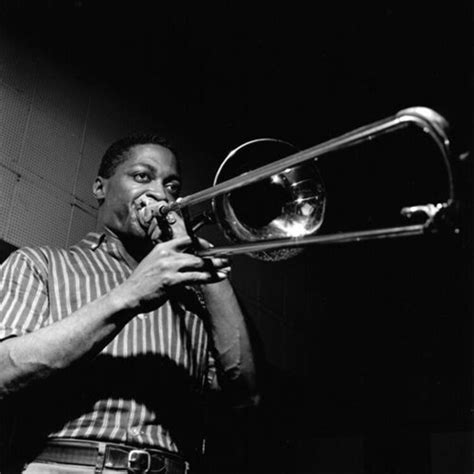
Well, jazz critics didn’t like it that album too much at the time: “Four long selections made up of solos by Harden (a colorless flugelhornist), tenor saxophonist John Coltrane running scales, and trombonist Curtis Fuller mumbling desultorily have little to recommend them.”
“Tanganyka Strut”, Tanganyka Strut, 1958
We have Coltrane’s (almost classic, Reggie Workman on bass) quartet complemented by seven horns — Booker Little (trumpet), Julius Watkins, Bob Northern, Robert Swisshelm (french horn), Bill Barber (tuba), Pat Patrick (baritone saxophone), Eric Dolphy (alto saxophone, bass clarinet, flute) — who furnish a rich and powerful sonic background.
This huge band embarks in 16 minutes of modal improvisation involving basically one chord (D-6/9/E, meaning that almost all notes of the scale are played, but for C and G), but the piece alternates between meditative moments and forceful riffs which were orchestrated by Dolphy and Tyner.
The piece starts with plucked notes on the bass, then comes the drums, then the piano, then the horns deepen the sound, and after a minute, Coltrane plays the melody and continues with his chorus.
Around 5:45, Tyner starts a series of repeated movements, while Workman improvises on the bow, and then Tyner starts his chorus on the upper range of the piano, essentially sustained by the chords accompaniment and the drums. Now Workman improvises at the same time with plucked notes. At some moment, the horn section adds riffs.
After roughly 10 minutes, the musicians quit the stage quietly and leave Jones free to embark in a glorious drum chorus that he builds thoroughly, step by step. After almost 3 minutes, Jones comes back and together, they restore the initial mood of the piece. Time for Coltrane’s second exposition of the theme. The bass ends the piece as if it had been a loop
This piece was born from an unexpected meeting of John Coltrane with the percussionist Juno Lewis. A few days later, they recorded this unique piece built on a poem by Lewis’s words and percussions (conch shell, hand drums).
It starts with a drum call by Elvin Jones; then come the percussions and the singing. After a while, other voices emerge and concur in a free improvisation. After 18 minutes, musicians pull out and leave us with the bass and percussions.
We have Coltrane’s classic quartet : he plays tenor saxophone, Elvin Jones is on drums, McCoy Tyner on piano and Kimmy Garrison on bass. With them Donald Rafael Garrett plays clarinet, bass and percussion, Pharoah Sanders plays tenor saxophone and percussion, Frank Butler is also on drums and vocals, and Juno Lewis on vocals, percussion, conch shell and hand drums.
I don’t understand the words. In the liner notes, Nat Hentoff tells they are spoken in an Afro-Creole dialect that Lewis calls Entobes. What I hear is something like:
This is rhythm. This is the cry of our ancestors. This is the pride that our lives embody. This is an everlasting dance. This is a prayer.
“Kulu Sé Mama (Juno Sé Mama) (J. Lewis), Kulu Sé Mama, 1967
This song was recorded in 1960 with McCoy Tyner on piano, Steve Davis on bass and Elvin Jones, but was only published in 1964 in the album Coltrane’s sound after Coltrane had moved from Atlantic to Impulse.
The AAB piece starts with Coltrane exposing the theme while the rhythm section doesn’t emphasize the pulsation. At the and of the B part, Jones starts playing a steady rhythm which propels Coltrane’s chorus: he plays in swing style on the A part and changes to an afro-cuban clave on the B part, and he will do the same for Tyner’s chorus. After that, Coltrane takes a riff on the chords of the A part for the final exposition of the theme. The piece ends in a drum roll.
“Liberia”, Coltrane’s Sound, 1964
This is more or less the end of this series of tunes by John Coltrane that show a definite African influence.
For Equinox, it is mostly limited to the intro part, and the rest is a slow blues on which Coltrane seems to be able to chorus endlessly. The rhythm section sustains the peaceful melody with a characteristic syncopated rhythm that first unbalances (for the first bar) and restores balance (at the end of the second bar).
Simple as it sounds, I hear this tune as one of my favorite compositions of John Coltrane. It was recorded in 1960, before the advent of his classic quartet, but only released in 1964, in Coltrane’s sound.
“Equinox”, Coltrane’s Sound, 1964
Let’s use yesterday’s tune, Equinox, with his harmonic reference to the blues, to start an exploration of John Coltrane playing the blues.
Codified by W. C. Handy at the beginning of 20th century, the blues form is simple: 12 bars, with a predefinite harmony where you basically only have 12 choices: where in the scale you do start from. (Basic playability concerns limits them further.) At some point, musicians embellished those three I, IV, V chords that constitute the form, and added enrichments, substitutions, secondary progressions.
In any case, this simple form provides a material that is characteristic of the Afro-American jazz music on which the musicians can express fluently their emotions.
Coltrane played that form a lot, and it influenced much of his music.
Here, we listen to Trane’s Blues, a piece he had first recorded in March 1956, in quartet, but this is a version that he recorded in May 1956, with Miles Davis as a leader, though it was only released in 1960. Paul Chambers is on bass, Philly Joe Jones on drums, Red Garland on piano.
“Trane’s Blues”, Workin’ with the Miles Davis Quintet, 1960
A fast blues (in Bb as for yesterday). With blazingly fast choruses by first class musicians: Lee Morgan on trumpet, Curtis Fuller on trombone, Kenny Drew on piano, Paul Chambers on double bass and Philly Joe Jones on drums (listen to his long intro, and to his chorus from 5:45 on!).
“Locomotion”, Blue Train, 1958
Another blues, from Coltrane plays the blues, an album exclusively dedicated to the blues form, recorded in 1960 with McCoy Tyner, Steve Davis and Elvin Jones.
“Blues to Elvin”, Coltrane plays the blues, 1962
Another blues, by Coltrane’s classic quartet, in the 1964 album Crescent. Coltrane gives two expositions of the theme and leaves the stage to Tyner who I feel first plays quite unusually, and the first rhythmic chords give Coltrane the signal to start his chorus, a large part is in bass/drum/sax trio. The piano comes back for the final exposition.
“Bessie’s Blues”, Crescent, 1964
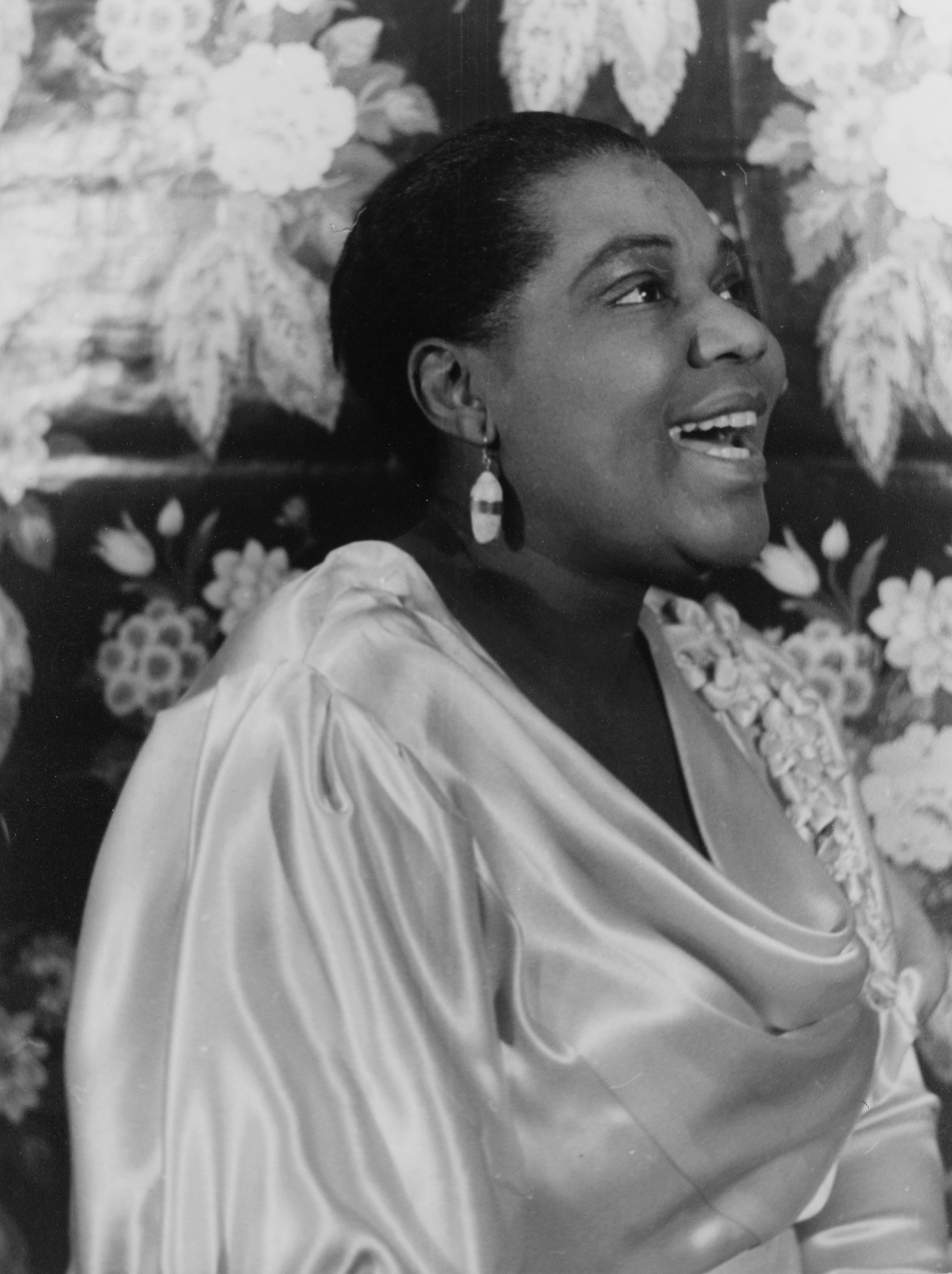
Bessie is Bessie Smith (1984-1937), “the Empress of the Blues”, who was one of the prominent singers in the 1930s. She also appeared in films, such as “St Louis Blues”. Her influence on blues was stopped brutally and too early following a fatal car accident.
Yet another blues, this one in Ab, but listen how it takes some liberty with the classic form: the theme consists the same (great) rhythmic phrases of (a bit more than) two bars followed by two bars filled by Red Garland on piano, repeated 6 times. The harmony stays in Ab for the first 3 times, Paul Chambers on bass and John Coltrane playing at unison, without drums. Art Taylor enters for the next three phrases and the harmony of the blues start being felt. Then the choruses start and the musicians stick to an enriched version of the blues form.
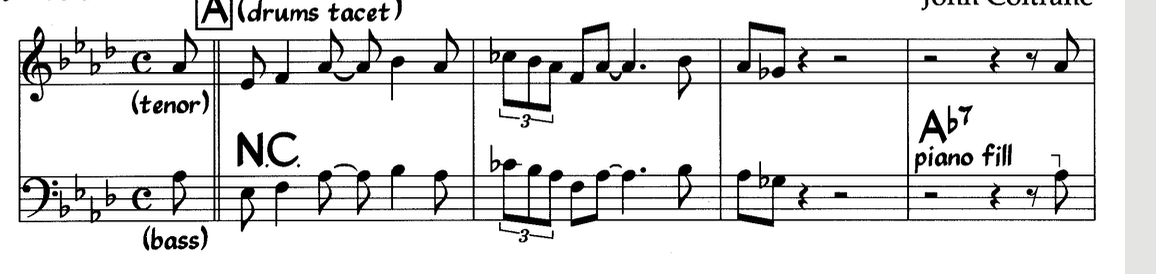
After four wonderful choruses (Coltrane, then Garland, then Chambers on the bow, then Taylor), the musicians take the first part in the reverse order.
“Bass Blues”, Traneing In, 1958
Continuing our exploration of the blues in John Coltrane’s music, let’s take for once a minor blues. The chords are minor, and the third phrase, returns to I using VIb-V rather than V-IV. Of course, the chord progression used by Coltrane in that tune is more sophisticated. Also, the speed of the tune (252 bpm) gives it a stronger color than the expected one.
It appeared in 1960, in the album Giant Steps. Art Taylor is on drums, Tommy Flanagan on piano, and Paul “Mr P. C.” Chambers is on bass.
A standard blues, with almost no melody beyond what the chord progression suggests. It is first played on piano (McCoy Tyner), then Coltrane enters to play it a second time. When comes the time of choruses, you realize how much Coltrane can say from such a simple material. All along the tune, the bass (Steve Davis) and the drums (Elvin Jones) both play a clear accompaniment, nothing distracts them from the blues.
A music lesson.
“Village Blues”, Coltrane Jazz, 1961
This piece is taken from a recording led by both John Coltrane and the vibraphonist Milt Jackson, composed by the latter — whose nickname was Bags because of the bags under his eyes.
Jackson was one of the founding members of the Modern Jazz Quartet in 1952 — a piano, vibraphone, bass and drums quartet offering a jazz esthetics quite different from the one of the be-bop era, cooler, devoid of the inherent anger of jazz, maybe closer to classical music.
Here, we have Hank Jones on piano, Paul Chambers on bass and Connie Kay on drums.
After four bars of intro in quarter notes, the theme starts three (almost) identical phrases of four bars, with one repeated short syncopated rhythmic figure (triplet-quarter note) and its longer variant (triplet-followed by four swung eigth notes and a full note), in which the first note of the triplet is omitted.
The choruses go by Coltrane, then Chambers on bow, then Jackson and Coltrane trade four, until they retake the melody and conclude.
“Bags & Trane”, Bags & Trane, 1961
Another blues (in C) taken from Giant Steps. It features 5 times the same 2-bar rhythmic figure (three notes only) and a transition on bars 9 and 10.
In the liner notes, John Coltrane wrote: “The figure is riff-like and although the changes are not conventional blues progressions, I tried to retain the flavor of the blues.”
I like the way Coltrane starts a final chorus at the end and finally concludes with the theme.
“Cousin Mary”, Giant Steps, 1960
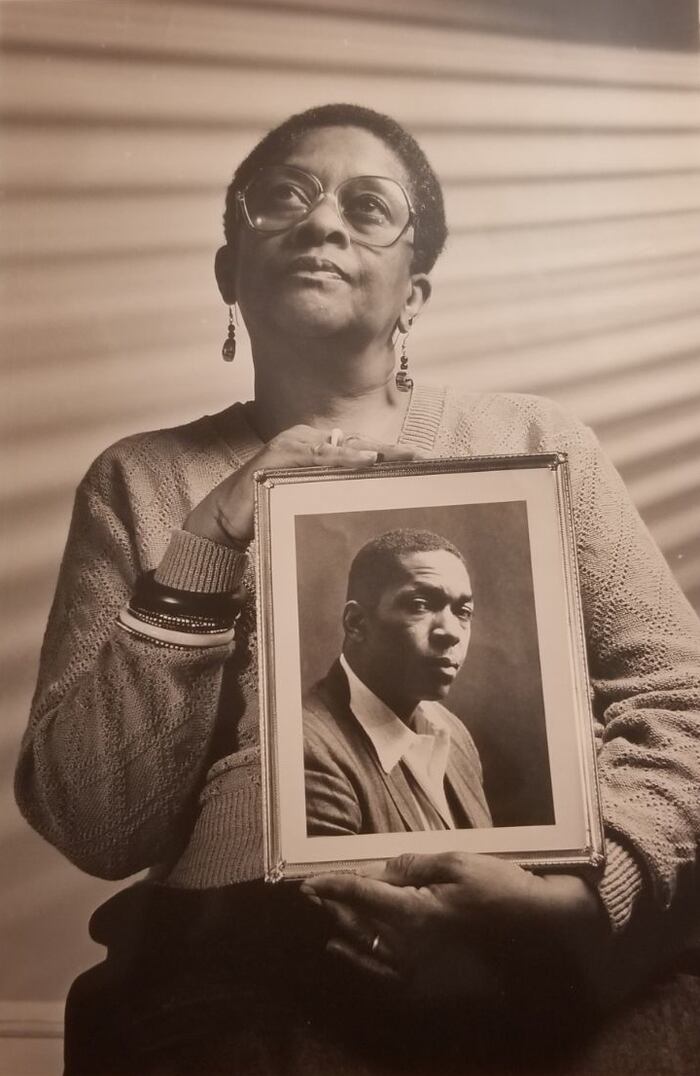
“Cousin Mary” was Mary Lyerly Alexander, a beloved cousin of John Coltrane. She was one year younger but they grew up together, in North Carolina as kids, and in Philadelphia as teenagers.
Coltrane described her as “a very earthy, folksy, swinging person.”
According to the Philadelphia Inquirer, “Coltrane bought the house on North 33rd Street with the help of a G.I. loan in 1952 for himself as well as his mother, aunt, and cousin.”
After Coltrane’s mother died in 1977, Mary returned to this house, where she lived until 2004. She died in 2019.
From Coltrane plays the blues (1962, bur recorded in 1960), this is a slow blues that allows a richer chord progression than the standard form.
The musicians play this quietly, without any haste. Coltrane’s first chorus (on soprano saxophone) is short and stays close to the theme, and goes on with another take of the theme. McCoy Tyner follows with a long chorus in which he pays his respect to the genre, by combining long scales and bluesy riffs. Coltrane takes the baton and adds long — almost shrieking — notes.
“Mr Syms”, Coltrane plays the blues, 1962
A blues from the 1958 album with the same title. Again, Coltrane takes the blues form and repeats 6 times the same 2 bar rhythmic motive, which actually consists of 4 syncopated eighth notes ending just before the end of the 2 bars. During the exposition of the theme, the empty measure allows from a simple response on piano (Kenny Drew). For the second exposition of the theme, the brass section enters (Lee Morgan on trumpet, Curtis Fuller on trombone) and harmonize the motive beautifully. Kenny Drew is on piano, Paul Chambers on bass, Philly Joe Jones on drums.
“Blue Train”, Blue Train, 1957
From Bags & Trane, recorded in 1959, another composition by the vibraphonist. After an introduction in half notes, Paul Chambers starts playing the theme on the bass — a repeated rhythmic phrase, a long one, with little harmonic variations — and is then doubled on vibraphone. Milt Jackson starts a chorus while Hank Jones comps on piano. It is only after Jackson’s choruses that Coltrane enters on tenor saxophone; for the first chorus the bass and piano only play syncopated half notes; notice how he gets freer and freer as long as the choruses go on. Jones’s chorus in a more classical style, and he soon leaves the space to Chambers whose chorus I find very clear and varied, while close in spirit to the main riff of the melody. At some point, he starts it again, Jackson doubles him on vibraphone, and the tune fades out.
“The Late Late Blues” (M. Jackson), Bags & Trane, 1961
This blues consists of a repeated one measure riff — whose last beat is sometimes embellished. Actually the same rhythmic figure as in “Blue Trane”, but it sounds differently because here it ends with a descending half-tone.
There is no piano here. Coltrane is on soprano saxophone, Steve Davis on bass, Elvin Jones on drums.
“Blues to Bechet”, Coltrane Plays The Blues, 1962
Sidney Bechet (1897-1959) was one of the most important saxophone and clarinet players from the New Orleans jazz style. His made his first recording in 1923, so 3 years before Coltrane was born. Nevertheless, Coltrane felt the need to write this tune for him, not long after Bechet died.
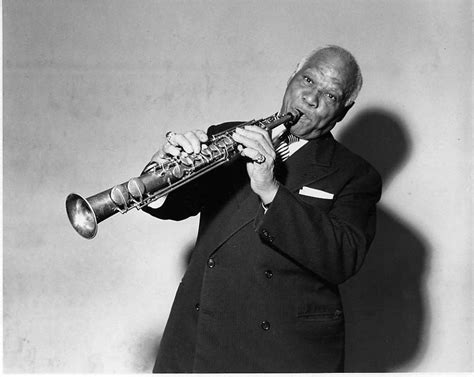
Lewis Porter wrote a paragraph about Coltrane playing soprano saxophone, after Miles Davis had bought him one:
For years he’d been pushing the upper limits of his tenor, as if yearning for an extended range, and a buzzing, more exotic, tone. He had heard the brilliant Steve Lacy, who specialized in the soprano, and had even asked him what key it was in: “He . . . was surprised to learn that it was the same key as the tenor,” Lacy recalled. The fact that both were in B-flat would make it easier to switch between the two. Coltrane knew the classic works of Sidney Bechet and of Johnny Hodges, once a Bechet protégé. He loved Hodges so much, he said, that “I ask myself if, today, I only play the soprano saxophone to stay in the lineage of Johnny Hodges—unconsciously, of course” (Postif). The soprano was so little used in modern jazz that many purchasers probably had not previously seen the straight instrument featured in the cover photo.
This file stems out a series of Mastodon threads, that was unthreaded day after day from September 23, 2026 on. You can also get it on Markdown or PDF formats.
There is also a YouTube playlist that collects all of these recordings.