Texts authored by A. Grothendieck
Texts concerning Grothendieck's ecological activities
Four lectures about Alexandre Grothendieck, delivered at Peyresq in 2008 by
C. Houzel,
L. Illusie,
M. Karoubi,
and
P. Cartier
Biographical information
-
A biography of Alexander Grothendieck, written jointly by W. Scharlau
(volumes 1 and 3) and Leila Schneps (volume 2)
- A brief timeline of Grothendieck's life
- Ein kurzer Lebenslauf von Alexander Grothendieck (German) (by W. Scharlau)
- The Mutants, An essay by W. Scharlau on Grothendieck's monumental unpublished work Les Mutants.
The first volume Anarchie in German, and its English translation Anarchy can also be purchased in book form from Amazon. The second volume, Mathematics is currently in progress. The third volume Spiritualität can be purchased from Amazon in German. Its English translation, Spirituality, can be found here.
Links concerning Grothendieck's childhood, Rieucros, Vernet
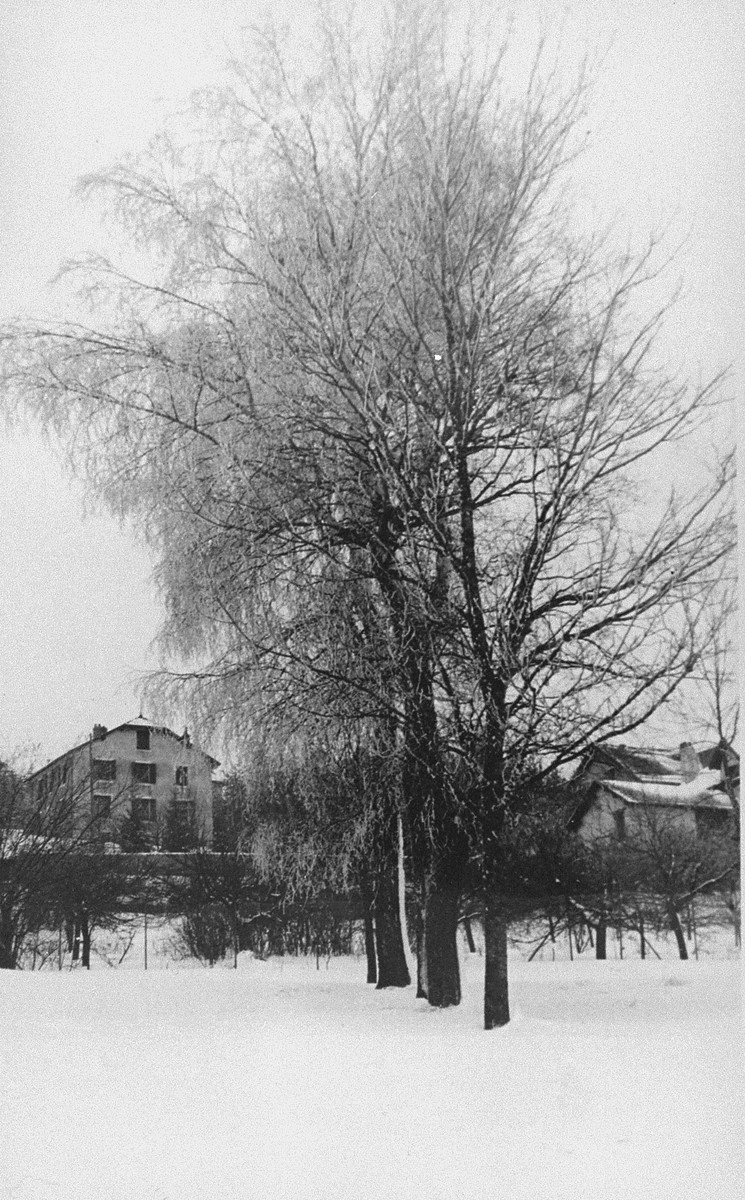
- The Camp de Rieucros where Grothendieck and his mother spent part of the war On November 12, 1938 the law concerning 'undesirables' was passed; among others, all Germans residing in France were to be interned in special camps. Alexander Grothendieck (aged 12 or 13) was interned in Rieucros together with his mother. His father was in the Camp du Vernet for men, whereas Alexander was allowed to remain with his mother in the women's camp of Rieucros.
- Camp du Vernet Link to the Camp du Vernet where Grothendieck's father Sascha Schapiro was interned, and from which he was deported to Auschwitz in 1942
- A few photos of the Camp du Vernet, then and now
- La Guespy and Chambon-sur-Lignon La Guespy was the Home for Jewish children run by Protestants in the village of Chambon-sur-Lignon during and after World War II. They saved countless Jewish children from Nazi roundups. Grothendieck spent the years 1943-45 at La Guespy and attended the Collège Cévénol while living there. He mentions this in La Clef des Songes, pp. 94-99.
- Alex at La Guespy Brief description of Grothendieck as a teenager by the directress of La Guespy
- Articles concerning the Stolpersteine ceremony of March 22, 2017: program of the ceremony, Berliner Mathematische Gesellschaft, Französischen Botschaft, and finally Heinrich-Hertz-Gymnasium ; the last from the school that participated in the Stolpersteine project led by Sylvie Paycha.
La Guespy, Le Chambon-sur-Lignon
Mathematical/biographical sketches of Grothendieck
- An interview with Jean Giraud Jean Giraud
was one of Grothendieck's graduate students
- The IHES at 40 This article by Allyn Jackson
discusses the history of the IHES, and includes a description of
Grothendieck’s influence on the institute (albeit containing several
errors).
-
Who is Alexander Grothendieck? This article by Winfried Scharlau
is a short version of his biographical writings.
-
Wer ist Alexander Grothendieck? The same article by W. Scharlau, in German.
- Comme Appelé du Néant --
As If Summoned From the Void
(Part I)
(Part II)
A very interesting two-part article by Allyn Jackson, from the
Notices of the AMS (Part I is in Vol 51, No. 4, Part II is in Vol 51, No. 10),
full of anecdotes about Grothendieck's youth and professional life.
-
Découvrir et transmettre: la dimension collective des
mathématiques dans Récoltes et Semailles d'Alexandre
Grothendieck
by A. Herreman
-
Notes on the life and work of Alexander Grothendieck
An 18-page biographical article by Piotr Pragacz, originally
published in Polish in Wiadomo´sci Matematyczne 40
(2004).
-
Mais où est le génie des maths? biographical sketch by
Roman Ikonikoff
- Memories of Shourik memories of Grothendieck by Valentin Poenaru
- Grothendieck no Brasil Memories (in Portuguese) of Grothendieck's stay in São Paulo, 1952-1954, by Alberto de Azevedo. This article appeared in Matemática Universitária No.44.
- Transcription of Illusie's reminiscences A text of the audio recording of Illusie above. of Grothendieck
- On Grothendieck's motive and Cezanne's motif, an article in Chinese by Kejian Xu, published in the Chinese journal "Mathematical Culture" (Vol. 3, No. 2, 12-33, 2012).
- Alexandre Grothendieck après 1970 - a short text of reminiscences about Grothendieck by Yves Ladegaillerie.
- A memorial article (in Spanish) by Luis Narváez Macarro, originally published in La Gaceta de la RSME,, Vol. 20 (2017), Núm. 2, pp. 297-324.
- A L'héritage d'Alexandre Grothendieck (in French) by Gautier Depambour, published in Science et Vie, April 2018.
- A three-part seminar devoted to Grothendieck was organized in 2015-2016 Bogotà, Colombia, by Fernando Zalamea: part 1, part 2, part 3.
- A lecture on Grothendieck's life and work by Olav Arnfinn Laudal.
- The Mysterious Disappearance of a Revolutionary Mathematician by Rivka Galchen in The New Yorker, 2022.
- Memories of Shourik memories of Grothendieck by Valentin Poenaru
Broadcasts devoted to Grothendieck
- Continent Sciences broadcast Autour d'Alexandre Grothendieck - with Denis Guedj, Michel Demazure and Laurent Lafforgue.
- La Marche des Sciences broadcast Entre ombre et lumière - with P. Cartier, M. Demazure and L. Schneps.
- Une vie, une oeuvre broadcast Alexandre Grothendieck ou le silence du génie - with Jean Malgoire, Jean-Paul Malrieu, Leila Schneps, Pierre Lochak, Pierre Cartier, Christian Escriva et André Joyal.
- La Méthode Scientifique broadcast L'héritage d'Alexandre Grothendieck with Pierre Cartier, Claude Viterbo and Anne-Sandrine Paumier.
- The audio of a discussion with Hervé Nisic, following the screening of his documentary film L'espace d'un homme about Grothendieck on April 18, 2013 in Marseille.
-
Grothendieck: una guía a la obra matemática
(in Portuguese), a
six-part lecture series by Fernando Zalamea, was broadcast by Ciencias TV
and can be viewed on YouTube:
1. Espacios Vectoriales Topologícos
2. Álgebra Homologica
3. Geometría Algebraica part 1
4. Geometría Algebraica part 2
5. Álgebra Topológica part 1
6. Álgebra Topológica part 2 - AMS collection of obituaries, Part 1
-- M. Atiyah, H. Bass, P. Cartier, P. Deligne, M. Demazure, M.J. Greenberg, R. Hartshorne, L. Illusie, N. Katz, S. Kleiman
- AMS collection of obituaries, Part 2 -- Y. Ladegaillerie, S. Lichtenbaum, P. Lochak, B. Mazur, W. Messing, D. Mumford, J. Murre, V. Poénaru, L. Schneps, J. Tate
- Alexander Grothendieck - by David Mumford and John Tate.
- Le Monde - by Philippe Pajot
- Libération - by Philippe Douroux
- Reporterre - An interview of Grothendieck's friend Christian Escriva
- The New York Times (first obituary) - by Bruce Weber and Julie Rehmeyer
- The New York Times (second obituary) - by Edward Frenkel
- The Washington Post - by Matt Schudel
- The Guardian - by Harvey Shoolman
- The Independent - by John Lichfield
- The Telegraph
- AMS collection of obituaries, Part 2 -- Y. Ladegaillerie, S. Lichtenbaum, P. Lochak, B. Mazur, W. Messing, D. Mumford, J. Murre, V. Poénaru, L. Schneps, J. Tate
- Eine Frau This 1500 page typed manuscript in German (not available online) contains Hanka Grothendieck's memories of her life from 1900 to 1928, the year in which she conceived Alexander. The story is told in the third person. As far as fairly extensive research and conversations with friends, family members and other records (mostly conducted by W. Scharlau) have been able to confirm, the book appears to reflect the factual truth in every detail except for changing of the names of the family members: Lotte Babendeerde for Hanka Grothendieck, Redy Spenzer for Alfred Raddatz, Frigga (Ilka) for Frode (Maidi), Hans, Peter and Helmut for her brothers Fritz, Claus and Siegfried... Sascha Schapiro is called Sascha in the book.
- La Clef des Songes The third chapter of this text (not available online by request of the Grothendieck family), Le voyage à Memphis (1): l'errance contains further details about the lives of Grothendieck's parents, including some things not described in Eine Frau
- Der Pranger a (retyped) issue the newspaper that Hanka Grothendieck wrote for in Hamburg in the 1920's
- Großstadtnächtliches Hanka's poem in Der Pranger for which the paper went to trial
- Eine Entdeckung: Hanka Grothendiecks autobiographischer Roman Eine Frau An essay in German on Eine Frau by Winfried Scharlau
- Alexander Schapiro/Tanaroff und Hanka Grothendieck The beginning of a biography of Grothendieck's parents, in German, by Winfried Scharlau
- Grothendieck's Dream of the Rising Sea A play by Adrian Heathcote, inspired by Grothendieck and his parents' lives
- Lotte à Berlin A play in French by Pierre Lochak inspired by Eine Frau
- Lotte in Berlin The German translation of the above play.
- Stienka Rasin - a German short story written by anarchist author Theodor Plievier (1892-1955) about his friend Sascha Tanaroff/Schapiro, Grothendieck's father.
Obituaries
Texts concerning Grothendieck's parents